Sunday, April 23, 2017


A visit to "The Muck" - State Game Lands 313 - Wellsboro, Tioga County, Pennsylvania

This past Saturday afternoon, I visited  “The Muck”  as it is locally known, it has a short gravel trail leading to a boardwalk which ends a blind in the middle of State Game Lands 313. It is located off Route 287 in Wellsboro Junction - just watch for the big 'The Muck' sign.

The gravel trail leading to the blind


Looking out over the wetlands from the blind area

SGL 313 is on a major flyway and birders come from all over to observe the species that may appear here.  However; there was no one there when I arrived  at 1:10pm (the last visitor to sign the log was two days before) and after spending about 1hour and 35 minutes in the blind, observing  a total of 27 species and just taking in the views out the windows at the surrounding wetlands and mountains.  I packed up my gear and left for the day - I truly enjoy birding at this location and can't wait for my next visit in a few weeks - below is a good link to the Muck site for the local Audubon Society.


Some of the species I observed included: Hooded Mergansers, Canvasback, Wood Duck, Ring Necked Duck, Swamp Sparrow, Barn Swallow and Eared Grebe.


Horned Grebe - molting into breeding plumage

Canvasback - taken with Iphone


I you are ever in Wellsboro...do yourself a favor, and be sure to visit one of the better birding spots in Tioga county...you may surprised at what species you will observe at The Muck..

Until Next time. 


.

Thursday, March 30, 2017


QAS Blackwater NWR weekend - Part 2

After a breakfast Saturday, March 25 at the Comfort Inn, we began our day at 8:10am..making our way to the Cambridge Lighthouse parking area (see view of Choptank River & Rt 50 Bridge)


Looking out over the Choptank River from the parking area

As we scanned the area, we observed Horned Grebe, Lesser and greater Scaup, and Surf Scoter. We had some of the best views of the Surf Scoter's that most everyone in the group had ever had in the calm waters.

Surf Scoter

Looking toward the RT 50 Bridge from the parking area


Our next stop was again along the Choptank River at Great Marsh Park..where we again observed rafts of Lesser/Greater Scaup, many Canvasbacks and American Wigeon - when we left the Choptank River area about 10:30am - our trip species count was hovering in the mid-60's. Our next destination was the Blackwater National Wildlife Refuge.

We arrived at the Blackwater NWR visitors center shortly before 11:30am (we stopped for snacks and drinks on the way down). After touring the visitors center and surrounding area for about 1 hour, we began the drive around the wildlife loop road.

Entrance to Visitors Center

Display in Visitors Center
 Upon entering the wildlife loop, we proceeded no more than 1/2 mile to the first pond, to make our first stop. At this stop, there is a fresh water pond, as opposed to most of the of the water in the area being brackish. Because of the fresh water, there where over 20 species of waterfowl on this one pond alone including: Green winged Teal, Ruddy Duck, American Wigeon, Bufflehaed, Gadwall, Snow Goose, Canada Goose, Northern Shoveler, and Pied Billed Grebe to name a few we observed. Our species trip list was now over 70 (link to wildlife drive brochure is shown below).

Blackwater WildlifeDrive brochure

As we where moving thru the pine tree wooded area of the drive, we heard Pine Warblers calling..stopping the car we got out and began searching for them. After about 15 minutes of hearing and not seeing (siniliar to what happened with the Brown Headed Nuthatches yesterday), we finally did get some very good looks a several Pine warblers -another target species off the list and life bird for four members of the group. Coincidentally, these where the first Pine Warblers I have seen in about 3 years...so it was a treat to see several of them at once and to hear many others signing in the background as we walked the trails.

Pine Warbler - stock photo

As we proceeded around the wildlife loop, we came upon a group from the Cecil County Bird Club (whom we had also met at our first stop - the freshwater pond)....who pointed out another of our target species for the trip - the White Pelicans. Unfortunately, the they where very, very far away and in a resting (head tucked) position. Given the we had time, and this was a life bird for several members in the group, we decided to stay and wait for a better look. We began observing some other species in the immediate area, and after a few minutes one of the Pelicans, did lift it's head giving everyone in the group a distant but much better look (see photo's below). The White Pelican was also a life bird for 4 members of the group.

White Pelican's
White Pelican's

Along the wildlife drive

After watching the White Pelicans, we continued along the tour road to it's completion. We then returned to the visitors center to make a few purchases in the gift shop. It was now almost 2:30pm, and we decided to make a short stop at one of the observation platforms we had misse , before starting for home.

From Observation platform - last stop of day.


At 3:30pm, we left the Blackwater refuge area and started for home, arriving back in Cornwall at 8:05 pm. Our species count for the trip that I have was 76 species. with many life bird and first of year birds for many in the group.

Until Next time - Good Birding


Monday, March 27, 2017

QAS Blackwater NWR weekend - Part 1

On March 24 & 25, a group from the Quittapahilla Audubon society made a seasonal trip to the Blackwater National Wildlife Area in Cambridge. Md. - this is a summary of that trip.


On Friday, March 24, all 8 members attending the trip, met in Cornwall - set up the car pooling and driving directions and left for our first stop - the Chesapeake Bay Environmental Center (CBEC) in Grasonville, Maryland.We decided to stay off the Interstate roadway system for the trip down, and to instead take a more scenic route thru the country in hope of observing more bird species (and less traffic) on the way down to our first stop in Grasonsville.


Bayrestoration.org

 Location:
600 Discovery Lane
Grasonville, MD 21638
PH 410-827-6694

Traffic, as it turned out, was rather light, and we arrived at the CBEC around 11:15am, to somewhat overcast skies, but with the temps rising to the upper 60's - it was going to be a rather nice day. Our first destination was the visitors center, where we met with some very friendly employee's and volunteers - who reviewed with us what was being seen recently and where we may be able to observe a nesting Great Horned Owl and  a Cackling Goose on the grounds.

As started walking the blue trail from the parking lot, our species count was at 14...adding a FOY (first of year) Eastern Phoebe to the list and several other common species including Carolina Chickadee & Turkey Vulture. 

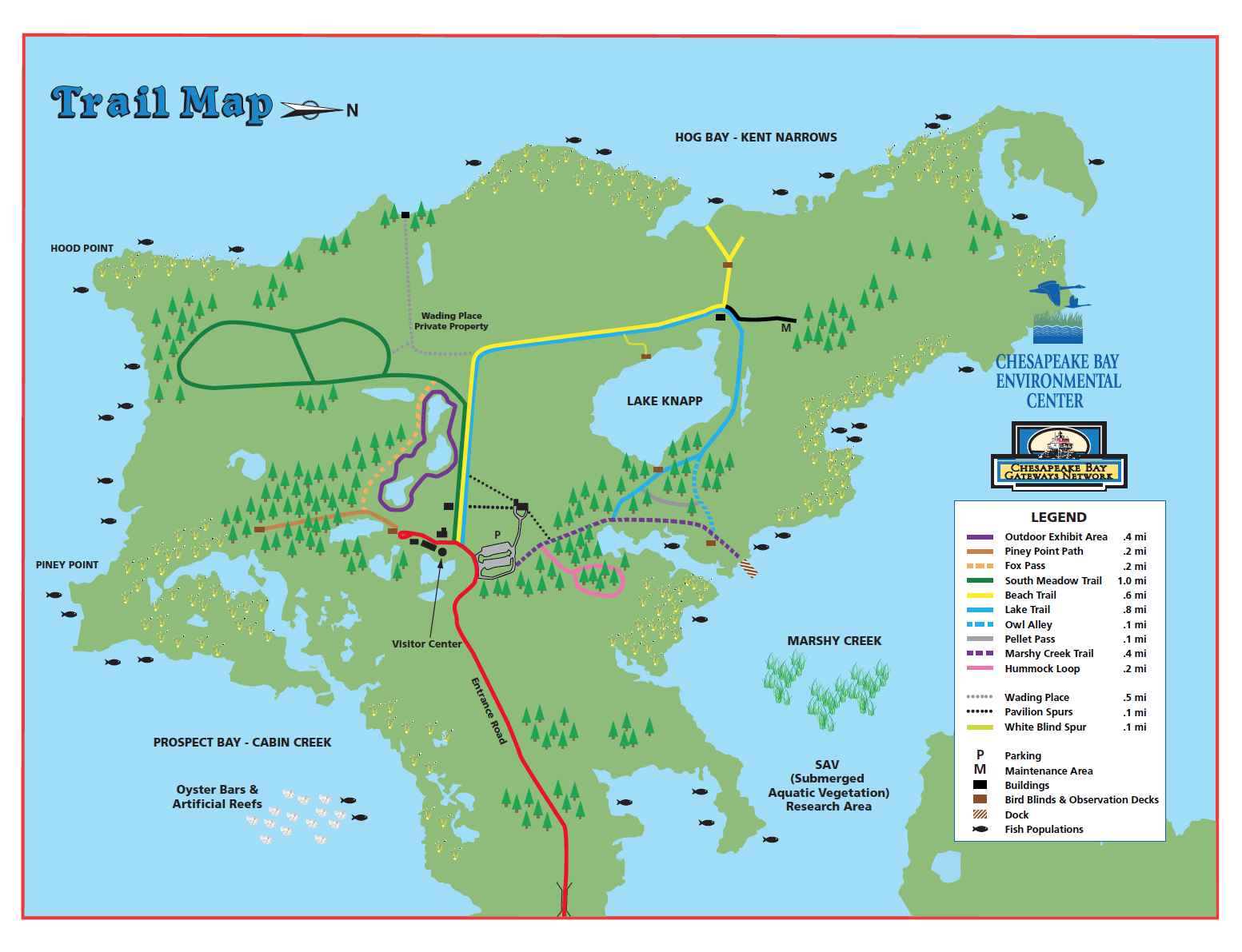
Our target species for this area was the Brown Headed Nuthatch. And as we walked along the beginning wooded section of the blue trail, we could hear many of Brown Headed Nuthatches calling...but could not any see them. After some frustrating minutes trying to observe them, in the very tops of the pines and not having very much luck (other than a few quick glances) - we decided to move along to another area along the trail and to an observation platform overlooking the Hog Bay area. The observation platform gave us just enough height, to see the nuthatches, and as luck would have it, several flew into the pines almost directly in front of us, giving everyone good looks at in the now almost prefect sunlight that was beginning to peek thru the clouds - for five members of the group the Brown Headed Nuthatch was a life bird!! Target species #1 was in the books.

View looking to Kent Narrows  - there are thousands of waterfowl sitting on the water


Brown Headed nuthatch - stock photo

View from Platform - there are rafts of waterfowl on the pond.
As we began scanning the water from the platform overlooking Hog Bay (see map), we where observed several hundred Canvasbacks, many Lesser & Greater Scaups, Red Throated Mergansers, Buffleheads and several thousand of Ruddy Ducks. - our trip total now was at 28 species. I can say that for everyone in the group we have never seen so many Ruddy Ducks concentrated in one area - there were just rafts and rafts of them as far as we could see along the entire length of the Hog Bay- a truly amazing site. After departing from the platform, we continue along the trail to the area where we had been informed you could observe the nesting Great Horned Owl, and sure enough the after taking a few minutes to locate the nest - we did in fact see the Great Horned Owl, sitting on the nest...a nice unexpected addition to the trip species listing.
Great Horned Owl - stock photo

 After several minutes and picture taking at the owl nest, we continued or trek along the loop trail. As we walked, was began to see movement on the Bayberry bushes along the trail  - and that could only mean one thing - Yellow Rumped warblers at this time of the year - and sure enough we observed several moving in and out of the Bayberry bushes feeding on the seeds. Another FOY bird for many in the group.

Yellow Rumped Warbler - Id chart

We continued along the trail observing several more species including: Song Sparrows, Cardinals, Tree Swallows, Osprey, and another FOY species - a  Brown Thrasher. We did additionally, see the Cackling Goose mixed in with the Canada Geese..another life bird for 4 members of the group.


Cackling Goose at left behind Canada Geese

We ended our walk near the visitors center with a total of 37 species - and hitting our target species and the Great Horned Owl and the Cackling Goose as a surprise added bonus.After a quick snack, we returned to our vehicles to continue our journey to Cambridge and Blackwater NWR - the time was 3pm we had spent 3 hours completing the blue loop trail.

We decided to have dinner when we arrived in Cambridge and then drive to the Blackwater NWR Maple Dam Road area, in hopes of seeing the Short Eared Owls that had been recently reported in the area.
We arrived at the Maple Dam Road area around 6:30 pm and for the next 1-1/2 hours looked for the Owls, but had no luck..I think maybe the recent controlled burn (see photo below) in the area may have caused them to move to a different  area. A bonus was the observation of the Gary Ghost - a male Northern Harrier - that was in the area giving us several good views the entire time we waited for the owls.

At 8:15pm, we checked into the hotel, at 8:45pm we met in the hotel lobby and reviewed our checklists for the day and at 10:00pm, almost everyone was retired for the evening after a long day of birding.

 We ended the day with a total of 63 species.

Controlled burn area. near Short Eared Owl site
Jim & Fritz watching for the Owls as the sun set

Part 2 of this post - will be on the Blackwater NWR portion of the trip. 

Until Next time - Good Birding.


Saturday, March 18, 2017


Snow Brings New Yard Birds to Feeders

With the recent snow (over 14 inches in my back yard) our weekend trip to Middle Creek wildlife Area was cancelled, as the tour road was closed - so I decided to spent some time watching my feeders.
Yard Feeder Area

At first the usually suspects showed up: Junco's, Cardinals, Carolina Chickadees and Red Bellied woodpeckers.

Red Bellied Woodpecker

After about 20 minutes, I noticed a different sparrow species other than the Song Sparrows I have been seeing, but it remained hidden under the pine trees (see photo of feeder area above)showing itself only briefly. Determined to see what species this was, I set up my scope and waited...after a few rounds of hide and go seek - I finally got a good look and was surprises to see a Fox Sparrow - a first for my yard..needless to say I was delighted. After watching the Fox Sparrow 'scratch' for food - it  confirmed the species.   

Fox Sparrow
What happened next, surprised me even more, I saw another sparrow species that was somewhat different from the Songs and Fox, it was much smaller and different colored...and after careful looks and checking my guide to confirm...it turned out to be a Lincoln's Sparrow - another yard first and rare bird for this time of year and area.

Add caption

I was quite excited, two (2) new yard and year birds in one day and one of the them a rare species....I had high hopes of seeing even more of the them..when the resident Cooper's Hawk decided to visit the feeder area looking for breakfast and everything scattered...that was after 1-1/2 hours and 20 species..not a bad day.

Until Next time


Sunday, March 12, 2017


Rusty Blackbird at Middle Creek

 A Rusty Blackbird was reported at Middle Creek the last few days - it's another rather rare species for our area - so with forecast calling for heavy snow the next 2 days, I thought it was a good day to go birding and look for this species.
 
As I entered Middle Creek Wildlife Area, I noticed that most of the ponds had a thin layer of ice on them...limiting the waterfowl species that I would be seeing - which was ok, sincew I was looking for a land species that likes wetter habitat - the Rusty Blackbird.

A started at stop one - observing Coots, American Wigeon, Lesser Scaup, and Hooded Mergansers..plus a few other species...my count was at 16 when I left stop 1.

Hood mergansers

Hooded Merganser Pair
 
Lesser Scaup
After leaving stop 1 I drove around the tour road, adding Meadowlark, Bluebirds and Northern Harrier  plus a few other species..bringing my count to 28.


As it would turn out, 28 is where my count stopped..I did not see the Rusty Blackbird, or for that matter any Grackles either. A little disappointed I headed for home, after about 2 1/2 hours of looking to no avail and making another loop on the tour road.

On the home, I spotted a huge flock of 'blackbird species' foraging along the road in a wet area...one of few not frozen. I immediately stopped and began glassing the birds...spotting Red Winged Blackbird, Brown Headed Cowbird, Starling, Common Grackle. and finally a Rusty Blackbird...and then another...I kept scanning the large group....but a car drive past and they all scatters....but I did have my Rusty Blackbird for the year at a most unlikely spot...just goes to so you...always check the flocks...just don't drive past..it may pay off,  as it did for me (the photo below was taken at Middle Creek on March 11 by Zack Millen).

Rusty Blackbird at Middle Creek
Until next time - good birding.


Monday, February 27, 2017


QAS Brigantine NWR trip - Feb 25 - part 2

This is a recap of the second part of the QAS Audubon New Jersey trip. After leaving Barnegat Lighthouse, we traveled south on the garden state parkway to Rt 9, which took us to the entrance of the NWR...we arrived in the visitor center parking lot about 1pm.


A look out over the Marsh
After a short break for some lunch and snacks at the visitors center, wee began our drive around the 8mile long tour road.

Tour Road


We didn't have to go far, before we spotted our first waterfolw species...a mallard!!! The mallards where quickly followed by Pintails, Black Ducks,Ruddy Ducks & Buffleheads - we hadn't gone a half mile and our list had grown by 8 species.


 At our next stop, we spotted several Northern Harriers, Canvasbacks, Snow Geese, Green winged Teal, and several hundred Black Ducks.There where also lots of Brants flying about. with many smaller flocks crossing the road both behind and in front of us..making for a great show.

Brants flying across road

We proceeded a little farther along the road and continued to see Pintails, Black Ducks and Mallards..and several hundred gulls...mostly Ringed Billed and Herring, with a few Greater Black Backed gulls mixed in.
 
                                    
As we reached the half way point on the tour road,we spotted a pair of Peregrine Falcons sitting on the nesting platform..always a treat to see Peregrines. As we continued on the tour road, not many more species where added...we did continue to see all the other species in large numbers but only added Tundra Swans to our overall species list.


We exited the tour road and returned to the visitors center on last time before departing for home around 3:30pm before the forecast rain showers began. 

We arrived back in Cornwall around 6:30 pm  and ended the trip with a total species  count for the trip at 48 - and hitting all the target species for the trip.

Until next time - good birding


Sunday, February 26, 2017


QAS Barnegat Lighthouse New Jersey State Park trip - Feb 25th - part 1

Here is a recap of our annual trip to Barnegat Lighthouse to see the Harlequin Ducks and Purple sandpipers. Barnegat is one of the few places where you can reliably see both of these species annually.

Walking out Jetty..looking back toward lighthouse


Our group of four met at 6am at my home to begin the 3-1/2 hour drive. The weather was looking like it was going to cooperate - with temps getting into the upper 60's F and no rain forecast until later in the afternoon. The drive was uneventful, and after a brief stop for a quick breakfast, we arrived at our destination around shorty before 10am.

Old Barney Lighthouse form the jetty walkway
Barnegat Lighthouse


When we arrived there was a light fog in the area, that the sun was burning off. As in other years, we where greeted in the parking lot by a host of gulls...including Ring-Billed, Herring and Greater Blacked Backed - 3 species to start.

As we gathered our gear for the walk out the jetty, we added several more common species....crows and grackles to name a few.
The Jetty


As we walked toward the lighthouse and the jetty - we scanned the inlet and soon enough found our first waterfowl species of the day....a Red-Throated Loon, actually several of them, quickly followed by several Long-tailed Ducks and a few Common Loon - our count was growing.

Red Throated Loon

The weather could not have been better (it's usually below freezing with wind chills making it feel much colder on the jetty)...but not today...temps where in the mid 50's and climbing making the walk out the jetty actually enjoyable.

About half way out the mile long jetty, we encountered out first target species for the day...Purple Sandpipers. They where mixed in the a group of Ruddy Turnstones and the light was prefect...allowing for almost prefect viewing conditions of both species.


Purple sandpiper


Ruddy Sandstones & Purple Sandpipers


We continue our walk, and within a short distance spotted another target species.. the Harlequin Ducks. Again the light was great and afforded us some great views of this delightful species. There was a total of 14 Halequins Ducks seen for the day...a high single day count for me.

Harlequin Ducks 


As the fog returned, we reached the end of the jetty, and ask a group fo other birders if the recently reported King Eider had been spotted today. As was expected, with the fog, it had not been.We decided to spend some time at the end of the jetty, in hopes that the fog would lift.

Lots of Dunlin


As we waited, we did tally some Sanderling, Black Scoters, Surf Scoters and several Common Eiders...but no King Eider.

Common Eider


The fog never lifted and after about 1 hour we started our walk back toward the parking area....ending up with a  total of 23 species.

After a quick snack, we headed for our next destination, was Brigantine NWR about an hours to the south. Check the next post for details on this part of the trip.

Until Next time - good birding.